World Book Day! Why should we make the time to read?
World Book Day at school was a party. It was time to dress up, disrupt the day’s timetable and the pinnacle of the day, see the iconic black bookcase wheeled round the classroom corner to select a new story with your token.
World Book Day’s primary aim is to encourage life-long reading habits in children and show what pleasure it can bring, so why as adults is it just as important to find joy in reading and find time in our hectic schedules to pick up a book?
For me, its three things:
- Our modern world and industry are constant, and our attention spans are changing. I often can’t go 10 minutes alone with my own thoughts without picking up my phone to scroll endlessly through social media; once I’ve toured the usual suspects, I’ll soon find myself in a rabbit hole in Wikipedia and unsurprisingly, unable to switch my mind off to sleep. Reading has been shown to relax your body and reduce stress; it also provides an ‘escape’ from the real world. Sometimes it takes a huge amount of willpower to ditch the doomscrolling but taking just 5 minutes at the end or start of your day to read can help your quality of sleep and sharpen your mind.
- We’re lucky we work in an industry where no two days are the same, but some of the most random general knowledge facts I’ve acquired have been from a book – the last book I read spent an unnecessary amount of time talking about how to ‘bury’ a fig tree… but you never know when you might need this in a pub quiz. Reading fiction and non-fiction not only teaches us about the segments of history that are nowhere to be seen on a GCSE syllabus, but it also exposes us to diverse viewpoints and experiences. Diverse literature and genres can help us understand each other’s experiences and ultimately help us be more compassionate humans and deepen our understanding of other beliefs, cultures, and experiences.
- In our increasingly digital world where content is king, and our futures feel more uncertain than ever before, how do we teach the next generation what came before them and how to process the idea of the future? Historical texts in whatever form, have been with us since the dawn of time and have been the medium to tell people’s stories, viewpoints, and Other history students will snore at me for referencing the old-age quote that ‘those who do not learn history are doomed to repeat it’. Reading isn’t a solution for the world’s problems, but it might just open our minds to new ways of thinking and capabilities, so that we don’t repeat the mistakes of our past.
5 books to make you think this World Book Day:
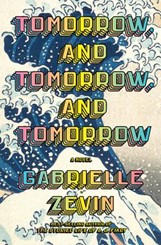
Tomorrow, and Tomorrow, and Tomorrow, by Gabrielle Zevin
“Friendship,” Marx said, “is kind of like having a Tamagotchi’.
This was the golden star of 2022, with rights signed off for a movie, #1 TIME Magazine Novel of the Year and another solid performance in our book club. When someone says ‘it’s about gaming but honestly it’s much more exciting than it sounds’ you have to give it a go and I was truly surprised about how many themes Zevin could squish into this beautiful book. Money, fame, identity, disability, love, gaming all come together to create a memorable story set over three decades, centred around the friendship between two friends.
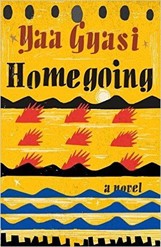
Homegoing, by Yaa Gyasi
‘We believe the one who has power. He is the one who gets to write the story. So when you study history, you must ask yourself, Whose story am I missing? Whose voice was suppressed so that this voice could come forth?’
This book stayed with me for a long time! Spanning over three hundred years, the story traces the history of two half-sisters Effia and Esi, whose fates couldn’t be more different. The book explores the long-lasting legacy of the trans-Atlantic slave trade and how this follows the characters across two continents and seven generations. Gyasi is an incredible writer and although emotional and disturbing throughout, this is an epic tale that is beautifully executed.
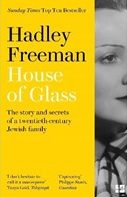
House of Glass, Hadley Freeman
‘How much of one’s ancestral identity must one give up to live in the modern world?’
House of Glass is a family memoir, in which the author pieces together letters, photos and memories to bring to life her Jewish family history across the twentieth century wartime period. This book twisted and turned in directions I never expected which is why I loved it so much. This isn’t a linear recount of the wars in Europe, instead we visit Picasso’s archives to Long Island to piece together a multitude of themes, from fashion to identity to assimilation.
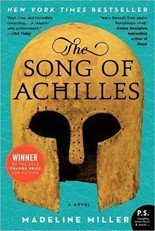
Song of Achilles, Madeleine Miller
‘And perhaps it is the greater grief, after all, to be left on earth when another is gone’
This book I think will forever sit in our Book Club Hall Of Fame. A retelling of Homer’s Iliad, which sets up a passionate love story against the backdrop of the Trojan War, you definitely do not need a BA in Greek Mythology to follow this story of love and loss. The open focus of a same-sex relationship within a ‘traditional’ historical subject matter was also seen to many as a watershed moment in the sector.
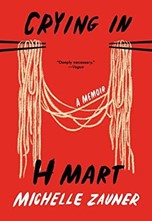
Crying in H Mart, Michelle Zauner
‘Save your tears for when your mother dies’.
I devoured this book last year and although I wasn’t familiar with the author herself, I banged on to my mum all holiday that she had to read it. Crying in H Mart is a memoir by singer Michelle Zauner reflecting on the death of her mother, but also Zauner’s connection to her mother through Korean food and culture. Zauner reflects on her life growing up mixed-race in America and powerfully maps a complicated mother-daughter relationship, whilst wittily and convincingly portraying the importance of food in culture and in grief.
Authored By Hayley Burrows